

of October 2026


- Get 7x the average checking rate1
- No fees or minimums2
- $50 or $400 direct deposit bonus. Terms apply.3
- FDIC insured up to $3M

- Manage your financial life
- New accounts earn $400, terms apply
- Open an account online, no minimum deposit
- Approx. 60k fee-free PNC and Partner ATMs

- Seamless digital banking experience
- No monthly or overdraft fees
- Earn 3.35% APY on Savings1
- Build your credit with the Builder Card2

- Zero monthly bank fees or minimums
- Get paid up to 2 days early with direct deposit1
- Borrow up to $250. Quals Apply2
- Build credit as you spend with Varo Believe3

- New checking customers earn up to $500
- Terms apply. See page offer for info
- Bank of America N. A. Member FDIC
- Get 7x the average checking rate1
- No fees or minimums2
- $50 or $400 direct deposit bonus. Terms apply.3
- FDIC insured up to $3M



Choosing an online bank provides a modern, flexible, and convenient way to manage your finances, offering round-the-clock access to accounts, competitive rates, and innovative tools—all from the comfort of any device. Explore the unique advantages of online banking and see how it aligns with your financial habits and lifestyle. If you're ready to make the switch, it’s now easier than ever to create a bank account online through secure platforms offered by banks online.
| Online Banking | Traditional Banking | |
|---|---|---|
Accessibility | ||
Convenience | ||
Security | ||
Service Speed | ||
Cost Efficiency | ||
Personal Interaction | ||
Loan/Account Setup | ||
Customization | ||
Cash Handling | ||
Competitive Rates |
What Is Online Banking?
Online banking lets you access your account and perform bank functions online instead of visiting a branch or making a phone call. What you can do online varies from bank to bank, but most let you deposit funds remotely, view your transactions, check balances, transfer funds, and more. You can also take advantage of mobile banking, which offers even more flexibility and allows banking on the go.
One of the biggest benefits is convenience. No matter where you are or what time of the day it is, you can access your accounts and bank without worrying about the branch being closed. It’s also swift and easy to use, whether online or in an app. Some of the best mobile banking apps also include budgeting tools, bill pay, and fraud alerts—all of which enhance your online banking experience.
Keep in mind that institutions that operate banks online exclusively will generally offer lower (or no) fees and more favorable rates thanks to lower overhead costs. Many users are now choosing to create bank accounts online to avoid traditional branch limitations.
What Is a Checking Account?
A checking account is a bank account that’s used to make deposits, perform withdrawals, and send transfers, among other things. They’re designed for everyday use as opposed to saving money over the long term.
Many people have their wages directly deposited into a checking account and use the funds to pay bills, make purchases with a debit card, and transfer to savings or investment accounts. These activities are now mostly done through mobile banking, offering a streamlined and accessible way to manage money on the go through online banks.
Here are a few pros and cons of checking accounts.
Pros
- Gives you a debit card to use
- Provides instant access to your funds
- Very easy to open in most cases
Cons
Opening a checking account through banks online may help reduce some of these fees, especially when you create a bank account online instead of in person. With the rise of digital platforms, more people are opting to create bank accounts online through secure, user-friendly banking sites.
Who Can Open a Checking Account?
Every bank has its own eligibility requirements, but in most cases, anyone who is over 18 years old and able to confirm their identity can open an account. However, if you have past banking issues like not paying overdraft fees, you could run into some trouble.
This is because some online banks use a consumer reporting system called ChexSystems to track deposit account history. When your history is questionable, a bank may stop you from opening an account. Fortunately, many banks online offer second-chance checking accounts, especially when you try to create a bank account online, which can bypass certain traditional checks.
If there are banking problems in your past, you could consider working with online banks that don’t use ChexSystems.
Our Top 3 Checking Accounts:
In a Nutshell
SoFi secured its bank charter in 2022, and now presents a range of online banking services—notably a combined checking and savings account. With this account, you benefit from an APY of up to 3.30% and zero overdraft or transaction fees. New accounts with eligible direct deposit receive a +0.90% APY boost, bringing the total to 4.20% for up to 6 months⁴.
Features
- Get 7x the average checking rate1
- No fees or minimums2
- $50 or $400 direct deposit bonus. Terms apply.3
- FDIC insured up to $3M
Most Popular Products

Pros
- Customer service available on weekdays and Saturdays
- No monthly or overdraft fees5
- Earn money with referrals, an awards program, and promotions
- Get paid up to 2 days early with direct deposit6
Cons
- No physical branches
- No business accounts
- Cash deposit fees
- Just one combined savings and checking account available
In a Nutshell
PNC Financial Services Group, Inc., commonly known as PNC Bank or simply PNC, is among the nation's top 10 largest banks. Its online accounts include PNC Simple Checking, Virtual Wallet, and Virtual Wallet with Performance Select. Additionally, PNC provides tailored services for students, military members, and non-native English speakers. A significant perk of PNC's checking accounts is the access to big bank services, including in-branch assistance.
Features
- Manage your financial life
- New accounts earn $400, terms apply
- Open an account online, no minimum deposit
- Approx. 60k fee-free PNC and Partner ATMs
Most Popular Products

Pros
- Branches and ATMs available across the country
- Many banking services, including loans, credit cards, and investments
- Special services and savings for veterans and students
- Open your account online with no minimum deposit required
Cons
- Many transaction fees
- The best rates are not available in all regions
- Multiple products and fees can get confusing
In a Nutshell
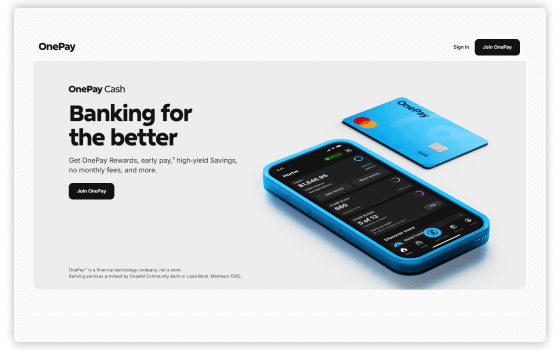
One is an online-only financial platform that integrates spending and saving into a single account. Partnering with Coastal Community Bank, One provides FDIC-insured services with features like early pay on direct deposits, no monthly fees and a user-friendly mobile app. You can get cash back on select purchases and high-yield savings if you become a Plus customer – either by maintaining a $5,000 minimum balance or setting up a minimum $500 direct deposit.
Features
- Seamless digital banking experience
- No monthly or overdraft fees
- Earn 3.35% APY on Savings1
- Build your credit with the Builder Card2
Most Popular Products
Pros
- No monthly maintenance fees
- High-yield savings with competitive APY
- Early access to direct deposits
Cons
- No physical branch locations
- Certain fees apply to non Plus customers
What Do You Need in Order to Open a Checking Account?
To open a checking account, your first step is to fill out and submit an application with the bank of your choice. The application will generally ask for the following details:
- Your social security number
- A piece of government-issued ID
- Basic personal information like your phone number, date of birth, address, and email
In today's digital world, you can often create a bank account online without visiting a physical branch. Banks online have streamlined their processes, making it simple for users to upload documents securely. Some providers even allow you to complete the entire process digitally and create a bank account online, offering a fast-track option with instant verification through mobile banking platforms.
While you can often open a bank account online with no deposit, some online banks may request a minimum amount. Others may ask for other information and/or documents not listed here. Still, many Americans prefer to create bank accounts online due to its speed and ease.
The length of time it takes to open a checking account varies. Some may only take 1–2 days, while others can take longer. In some cases, you can open a checking account online instantly. For those looking for best mobile banking experiences, providers that combine speed and a powerful app are top choices.
What Is the Difference Between a Checking Account and a Prepaid Debit Card?
A prepaid debit card is a card that you need to load money onto before you can make purchases with it. You can buy them from a bank or credit union, as well as retail destinations like grocery stores. These are generally the locations where you load/reload funds onto the card, though you can often do it online or over the phone, too.
A checking account and a prepaid debit card are both great ways to make purchases, but there are many differences between them. Choosing a checking account through banks online gives you broader access to services, including bill payments, account transfers, and mobile banking options that prepaid cards often lack.
The main difference between the two is that prepaid debit cards aren’t tied to an account and must be reloaded each time you use all the funds on the card. In contrast, a checking account comes with a standard debit card that you can use as long as you have funds in the account. Many consumers are now switching from prepaid cards to checking accounts via online banking for greater flexibility and access.
Prepaid debit cards also have fees associated with them, including activation fees, transaction fees, reload fees, or inactivity fees. So make sure to do your research on the best prepaid debit cards to find one that doesn’t charge a lot. While many checking accounts also have fees, there are fewer of them. The most common include monthly fees or ATM fees.
Another difference is that many checking accounts allow you to become overdrawn on your account, which means you can spend more money than you currently have. This feature can come with expensive fees, but it’s nice to have the option if you need it. In contrast, a prepaid debit card only lets you use what’s on the card, nothing more. Online banking accounts often allow users to manage overdraft options through mobile banking apps.
What Features Should You Look for When Choosing a Checking Account?
To ensure you choose the best checking account from the many existing options, look for the features outlined below.
Low or no fees
First, try to find a free checking account with no minimum balance requirement. You’ll find that some checking accounts have no fees at all, while others require you to maintain a minimum balance or do other things to waive the fees, such as having direct deposit set up. Monthly fees are the most important ones to look at, but you should also consider overdraft fees, transaction fees, ATM fees, and others. Some online banks promote free checking options if you create a bank account online through their website or mobile banking app.
Interest paying
You may also want to seek an account that pays interest. While such accounts aren’t likely to pay as much as investments or savings accounts, something is better than nothing. Keep in mind that some accounts advertise incredibly high interest rates on a checking account but may have several requirements to meet to earn that much. Banks online offering best mobile banking solutions often bundle interest-earning features with ease of access.
Excellent app
Another feature to look for is a highly rated app. Read reviews about the app and understand how it performs and the things it will let you do. The best mobile banking apps are intuitive, easy to navigate, and secure. They should have all the features you need, such as mobile check deposits, instant transfers, and the ability to view balances. The ability to create a bank account online directly through the app is also a big plus for convenience-focused users.
Credit-building features
If you struggle with poor credit, there are specific bad credit checking accounts and cards that can help you build credit by reporting payments to credit bureaus. These often work by having the company providing the account pay for your purchases initially, and then you pay it back afterward to build credit. This is a common feature in some online banking products offered by online banks, especially those designed for financial rehabilitation.
Overdraft coverage and/or protection
Having a checking account with overdraft protection or overdraft coverage is also a good idea. These ensure that transactions will go through even if you don’t have enough money in your account at that time.
For example, if your $1,000 rent is due today, but you only have $850 in your account, the overdraft coverage feature means the bank covers the rest to ensure that your rent payment is made on time and in full. Of course, you’ll need to pay back the amount you borrow and there’s also a fee associated with this feature in most cases, so be careful to use it sparingly.
On the other hand, overdraft protection allows you to link a different account to your primary checking account to cover any shortages. So instead of the bank covering that extra $150 for you, the money will come from another account you’ve linked. There may be a fee for using this feature, too. These tools are easily managed through mobile banking platforms provided by many online banks, ensuring a seamless experience for users who prefer digital financial tools.
Disclaimers
Chime
Chime is a financial technology company, not a bank. Banking services provided by The Bancorp Bank, N.A. or Stride Bank, N.A., Members FDIC.
Third-party trademarks used for informational purposes only; no endorsements implied.
1. Qualifying members will be allowed to overdraw their Secured Deposit Account up to $20, but may later be eligible for a higher limit of up to $200 or more based on Chime account history, direct deposit frequency and amount, spending activity and other risk-based factors. The SpotMe on Chime Card Limit will be displayed within the Chime mobile app and is subject to change at any time, at Chime's or its banking partners' discretion. Although Chime does not charge any overdraft fees for SpotMe on Chime Card, there may be out-of-network or third-party fees associated with ATM transactions and fees associated with OTC cash withdrawals. SpotMe on Chime Card won't cover non-card transactions. Spot Me on Chime Card Terms and Conditions.
2. Early access to direct deposit funds depends on the timing of the submission of the payment file from the payer. We generally make these funds available on the day the payment file is received, which may be up to 2 days earlier than the scheduled payment date.
3. SpotMe® on Credit is an optional, no interest/no fee overdraft line of credit tied to the Secured Deposit Account available to qualifying members with an active Chime Card Account. To qualify for the SpotMe on Chime Card service, you must receive $200 or more in qualifying direct deposits to your Chime Checking Account each month and have activated your physical secured Chime Visa® Credit Card or Chime Visa® Debit Card.
4. The Chime Visa® Debit Card and the secured Chime Visa® Credit Card are issued by The Bancorp Bank, N.A. or Stride Bank, N.A., pursuant to licenses from Visa U.S.A. Inc. and may be used everywhere Visa debit or credit cards are accepted. Please see back of your Card for its issuing bank.
5. Mobile Check Deposit eligibility is determined by Chime in its sole discretion and may be granted based on various factors including, but not limited to, a member's direct deposit enrollment status.
Qualifying direct deposit
The qualifying direct deposit must be from your employer, payroll provider, gig economy payer, or benefits payer by Automated Clearing House (ACH) deposit OR Original Credit Transaction (OCT). Bank ACH transfers, Pay Anyone transfers, verification or trial deposits from financial institutions, peer to peer transfers from services such as PayPal, Cash App, or Venmo, mobile check deposits, cash loads or deposits, one-time direct deposits, such as tax refunds and other similar transactions, and any deposit to which Chime deems to not be a qualifying direct deposit are not qualifying direct deposits.
6. Out-of-network ATM withdrawal and OTC advance fees may apply. View The Bancorp agreement or Stride agreement for details; see back of card for issuer.
*Limited time only. Terms apply, must open the new account and complete qualifying activities to earn up to $350.00 in rewards. Link to full terms can be found at https://www.chime.com/join/promos/intro-offer-v2b/#terms
Current
Current is a financial technology company, not an FDIC-insured bank. FDIC insurance up to $250,000 only covers the failure of an FDIC-insured bank. Certain conditions must be satisfied for pass-through deposit insurance coverage to apply. Banking services provided by Choice Financial Group, Member FDIC, and Cross River Bank, Member FDIC. The Current Visa® Debit Card issued by Choice Financial Group, and the Current Visa® secured charge card issued by Cross River Bank, are both pursuant to licenses from Visa U.S.A. Inc. and may be used everywhere Visa debit or credit cards are accepted. Current Individual Account required to apply for the Current Visa® secured charge card. Independent approval required.
1. Debit card: Fees may apply, including out of network cash withdrawal fees, third-party fees, cash load fees, inactivity fees, account closure fees, international transaction fees, replacement card fees, express mail fees and escheatment fees.
Build Card: Some fees may apply, including out of network ATM fees of $2.50 per transaction, late payment fees of 3% of any total due balance outstanding and past due for two or more billing cycles, foreign transaction fees of 3% of the full transaction amount (minimum $0.50), card replacement fees per card of $5 for regular delivery and $30 for expedited delivery, cash deposit fees of $3.50 per deposit, and third party processing fees.
2. Faster access to funds is based on comparison of traditional banking policies and deposit of paper checks from employers and government agencies versus deposits made electronically. Direct deposit and earlier availability of funds is subject to timing of payer's submission of deposits.
3. Actual overdraft amount may vary and is subject to change at any time, at Current’s sole discretion. In order to qualify and enroll in the Fee-Free Overdraft feature, you must receive $500 or more in Eligible Direct Deposits into your Current Account over the preceding 35-day period and fulfill other requirements subject to Current’s discretion. Negative balances must be repaid within 60 days of the first Eligible Transaction that caused the negative balance. For more information, please refer to Fee-free Overdraft Terms and Conditions (https://current.com/overdraft_protection_terms_of_service/). Individual Current Accounts only.
SoFi
1. 7x based on FDIC monthly interest checking rate as of December 15, 2025.
2. We do not charge any account, service, or maintenance fees for SoFi Checking and Savings. We do charge transaction fees for outgoing wire transfers, Instant Transfers, and global remittance transfers. Our fee policy is subject to change at any time. See the SoFi Bank Fee Sheet for details at sofi.com/legal/banking-fees.
3. New and existing Checking and Savings members who have not previously enrolled in Direct Deposit with SoFi are eligible to earn a cash bonus of either $50 (with at least $1,000 total Eligible Direct Deposits received within 25 calendar days of your first Eligible Direct Deposit of $1 or more) OR $400 (with at least $5,000 total Eligible Direct Deposits received within 25 calendar days of your first Eligible Direct Deposit of $1 or more). Cash bonus amount will be based on the total amount of Eligible Direct Deposit received within 25 calendar days of your first Eligible Direct Deposit of $1 or more. If you have satisfied the Eligible Direct Deposit requirements but have not received a cash bonus in your Checking account, please contact us at 855-456-7634 with the details of your Eligible Direct Deposit. Direct Deposit Promotion begins on 5/15/2026 and will be available through 12/31/2026. Full terms at sofi.com/banking. SoFi Checking and Savings is offered through SoFi Bank, N.A., Member FDIC. SoFi members with Eligible Direct Deposit can earn 3.30% annual percentage yield (APY) on savings balances (including Vaults) and 0.50% APY on checking balances. There is no minimum Eligible Direct Deposit amount required to qualify for the 3.30% APY for savings (including Vaults). Members without Eligible Direct Deposit will earn 0.80% APY on savings balances (including Vaults) and 0.50% APY on checking balances. Interest rates are variable and subject to change at any time. These rates are current as of 9/23/26. Fees may reduce earnings. Additional information can be found at http://www.sofi.com/legal/banking-rate-sheet.
4. Overdraft Coverage is limited to $50 on debit card purchases only and is an account benefit available to customers with Eligible Direct Deposits of $1,000 or more during the current 30-day Evaluation Period as determined by SoFi Bank, N.A. The 30-Day Evaluation Period refers to the “Start Date” and “End Date” set forth on the APY Details page of your account, which comprises a period of 30 calendar days (the “30-Day Evaluation Period”). You can access the APY Details page at any time by logging into your SoFi account on the SoFi mobile app or SoFi website and selecting either (i) Banking > Savings > Current APY or (ii) Banking > Checking > Current APY. Members with a prior history of non-repayment of negative balances are ineligible for Overdraft Coverage.
5. Early access to direct deposit funds is based on the timing in which we receive notice of impending payment from the Federal Reserve, which is typically up to two days before the scheduled payment date, but may vary.
SoFi Bank, N.A. Member FDIC.
Additional FDIC Insurance - SoFi Bank is a member FDIC and does not provide more than $250,000 of FDIC insurance per depositor per legal category of account ownership, as described in the FDIC’s regulations. Any additional FDIC insurance is provided by the SoFi Insured Deposit Program. Deposits may be insured up to $3M through participation in the program. See full terms at SoFi.com/banking/fdic/sidpterms. See list of participating banks at SoFi.com/banking/fdic/participatingbanks.
OnePay
OnePay is a financial technology company, not a bank. Banking services provided by Coastal Community Bank or Lead Bank, Members FDIC. The secured OnePay Builder Mastercard® is issued by banking partners pursuant to a license by Mastercard® International Incorporated.
1. 3.35% annual percentage yield (APY) applies to the Savings balance of OnePay deposit accounts. APYs are as of 8/1/2026, but may change at any time before or after account opening.
2. Builder Card is designed to help you build credit by reporting your Builder Card activity to TransUnion, Experian, and Equifax, unless you opt out. Any changes to your credit score are independently determined and based on your overall financial behavior. Results may vary and are not guaranteed. Transactions using your virtual debit card are not reported. See Licenses.
VaroMoney
1. A full list of Varo fees can be found here.
2. We give access to direct deposits from employer & government payers on the day we receive them, typically up to 2 days earlier than your scheduled pay date.
3. Varo Advance qualification is subject to evaluation of consumer reports and Varo account activity. If approved, initial limits range from $20- $250. Unlock higher limits up to $700 over time when you bring your qualifying direct deposit to Varo and build a positive history with us. Negative repayment history may impact credit. Fees range from $1.60 - $100 based on loan amount, and deposits to your Varo Bank Account. Your current limit and applicable fees can be viewed in the Varo App. Qualifying direct deposits are electronic deposits of your paycheck, pension or government benefits (such as Social Security or unemployment) from your employer or government agency to the extent that can be identified. Tax refunds and government stimulus payments, Person-to-Person payments (such as Venmo +or Varo to Anyone), and funds deposited using a Varo routing number are not considered a direct deposit.
4. Varo Believe is a secured credit card designed to help you build credit; however, a variety of factors impact your credit and not all factors are equally weighted. You must add money before using, money added sets the spending limit. Funds spent are held in your Varo Believe Secured Account to pay off any balance in full monthly, when due. Quals apply. The Varo Visa® Believe Card is issued by Varo Bank, N.A. pursuant to a license from Visa U.S.A. Inc
Alliant High-Rate Digital Checking
1. The savings dividend provides an Annual Percentage Yield (APY) of 3.01%. The APY is accurate as of the 1/22/2026 dividend declaration date. Dividends are paid on the last day of the month to accountholders who have maintained an average daily balance of $100 or more. Savings dividend may change after account is opened and is subject to change at any time. Dividend applies to Savings, Supplemental Savings, Emergency Savings, Kids Savings Accounts, UTMA Custodial Accounts, Trust Accounts and IRA. Fees may reduce earnings on the account.
2. Transactions performed at other ATMs may be subject to the ATM owner’s surcharge fee. Please see the online ATM Locator at www.alliantcreditunion.com or our mobile banking app for a list of ATMs that accept deposits or are surcharge-free. Not all ATMs accept deposits.
Alliant will rebate ATM fees up to $20 per month per membership account when you use your Alliant Visa Debit Card to make a deposit, withdrawal, transfer or balance inquiry. The rebate does not apply to cash advances from Alliant Visa credit cards through ATMs nor to the Alliant Savings ATM Card and Visa International Service Assessment (ISA) fee, referenced as the foreign transaction fee on account statements. Not all ATMs accept deposits.
AI was used in the creation of this content, along with human validation and proofreading.